
How to Prevent Ice Dams With Insulation Safely
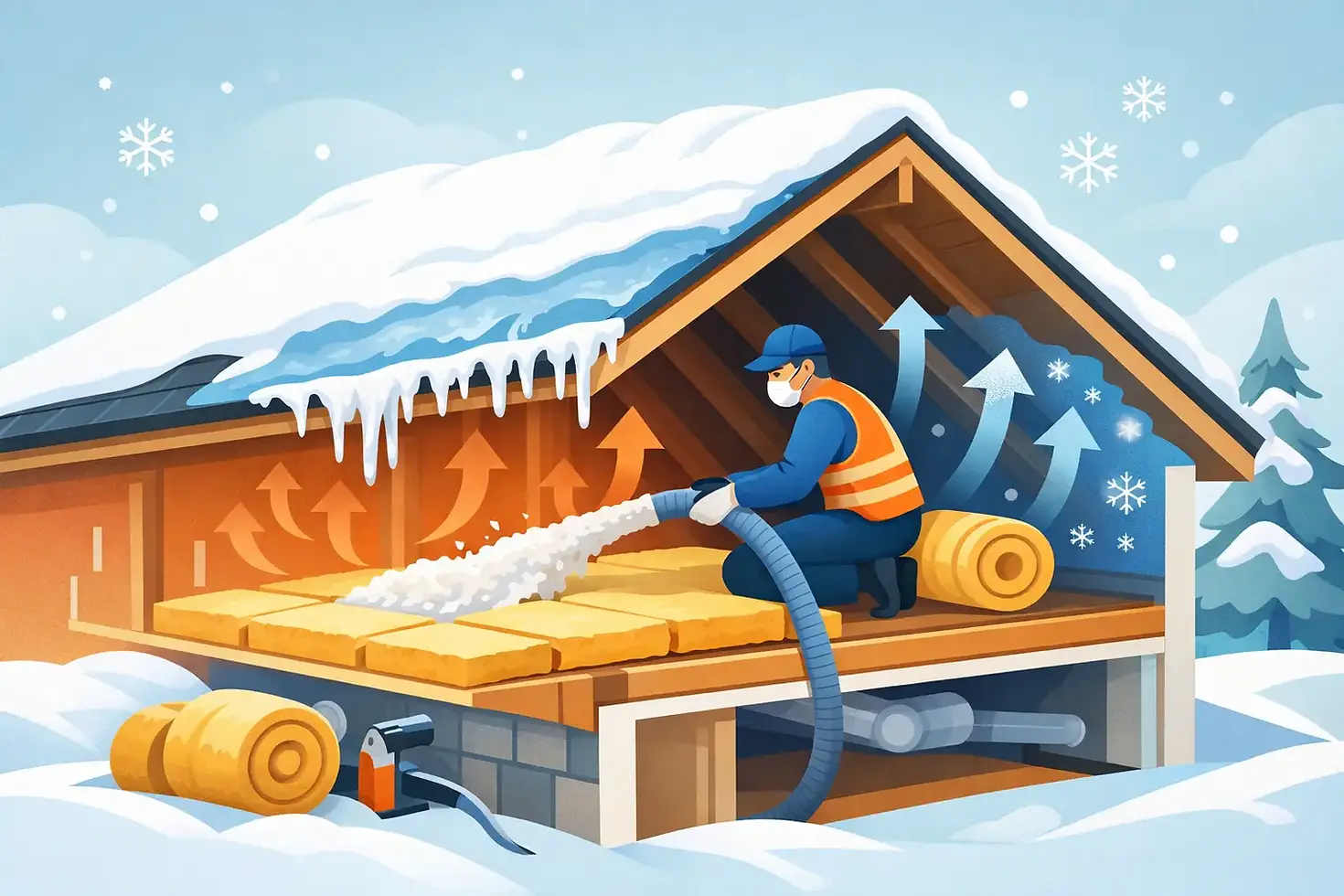
A row of thick icicles may look harmless after a snowstorm, but they can be a warning that heat is escaping through the roof. To prevent ice dams with insulation, the goal is not simply to add more material to the attic floor. You need to control the heat and air that reach the underside of the roof while allowing the attic to stay cold and dry.
For homeowners and cottage owners in cold, snowy regions, this is one of the most valuable insulation upgrades to get right. An ice dam can force melting water beneath shingles, damage roof decking, stain ceilings, and create conditions for mold. Addressing the cause protects more than your roof - it helps deliver a warmer, more even home and lower heating demand through winter.
Why Ice Dams Form in the First Place
Ice dams form when snow on the upper portion of a roof melts, runs down toward the colder eaves, and refreezes. The resulting ridge of ice blocks water from draining off the roof. As more snow melts above it, water can pool behind that ridge and work its way under the roofing materials.
Snow alone does not create the problem. The real issue is uneven roof temperature. In a well-performing attic, the roof deck stays close to the outdoor temperature, even when the home below is comfortably heated. When warm air leaks from the living space into the attic, or when insulation is thin, compressed, or missing, it warms sections of the roof from below.
This is why ice dams often appear over certain rooms rather than across an entire roof. Common trouble spots include areas above bathrooms, kitchens, stairwells, recessed lights, attic hatches, and additions. These locations often have more air leakage, less insulation, or difficult framing details that were never properly sealed.
How to Prevent Ice Dams With Insulation and Air Sealing
Insulation slows heat transfer, but air sealing stops warm indoor air from moving directly into the attic. Both are necessary. Adding a fresh layer of attic insulation over unsealed gaps can improve energy performance, but it may not fully solve an ice-dam problem because the warm air still has a path upward.
A proper assessment starts by looking below the insulation, not just at its depth. An insulation contractor may need to pull back existing material to identify openings around electrical penetrations, plumbing stacks, chimney chases, ductwork, top plates, and attic access points. These gaps can move surprising amounts of warm, moist air into the attic during winter.
Seal the ceiling plane first
The ceiling plane is the boundary between conditioned living space and the unconditioned attic. It should be as continuous as possible. Depending on the opening and surrounding materials, air sealing may involve appropriate sealants, rigid blocking, fire-rated materials, or spray foam installed in the right locations.
Special care is needed around chimneys, flues, and heat-producing fixtures. These areas require proper clearances and noncombustible materials where applicable. This is not a place for guesswork or for filling every opening with whatever foam is available at a hardware store. Safe detailing matters as much as thermal performance.
An attic hatch also deserves attention. A loose, uninsulated hatch acts like a hole in the ceiling. Weatherstripping the perimeter and adding an insulated cover or properly fitted hatch treatment can reduce heat loss at a frequently overlooked location.
Add enough insulation for the home and roof design
Once major air leaks are addressed, insulation can do its job more effectively. The right insulation level depends on the home's construction, climate, existing material, available attic depth, and local code requirements. Older homes and cottages frequently have uneven coverage, bare areas near the eaves, or insulation that has settled over time.
Blown-in insulation is often a practical solution for open attics because it can cover irregular framing and fill around obstacles more consistently than batts alone. It is especially useful for bringing an attic up to a recommended thermal level without major disruption to the home.
Spray foam can be appropriate in specific applications, such as difficult air-sealing details, cathedral ceilings, or roof assemblies designed to become conditioned attic spaces. It is not automatically the best choice for every attic. A roof's ventilation design, moisture behavior, and future repair needs should be considered before choosing a foam-based approach.
The key is consistent coverage. A high insulation value in the center of an attic will not compensate for thin spots around exterior walls, recessed areas, or complicated roof transitions. A professional installation should maintain full depth where possible while protecting ventilation paths at the eaves.
Keep soffit-to-ridge ventilation open
Attic ventilation does not replace air sealing or insulation, but it supports a cold roof by helping remove moisture and excess heat from the attic. In many vented roof systems, outdoor air enters through soffit vents and exits through ridge or roof vents.
Insulation should never block the intake at the eaves. Properly installed baffles maintain an open channel between the soffit area and the attic while keeping blown-in insulation from drifting into the vents. Without baffles, an attic upgrade can accidentally restrict airflow precisely where it is needed.
Ventilation is not a one-size-fits-all fix. A home with a complex roofline, multiple additions, or a finished attic may need a more detailed review. Simply adding more roof vents without understanding how air enters and exits can create little benefit or introduce weather-related concerns. The system has to work as a whole.
Signs Your Attic Needs Attention
Ice dams are the obvious sign, but they are not the only one. Rooms that feel colder than the rest of the house, frost on attic sheathing, unusually high winter heating bills, or recurring condensation around ceiling fixtures can all point to air leakage and inadequate insulation.
Look for these warning signs after a snowfall:
Snow melts faster over one section of the roof than over nearby areas.
Large icicles form repeatedly along gutters or roof edges.
Water stains appear on ceilings or exterior walls after a thaw.
The attic smells damp, shows frost on nails, or has dark staining on roof sheathing.
Insulation is visibly thin, uneven, compressed, or pulled away from the perimeter.
Do not assume every leak is an ice dam. Failed flashing, aging shingles, plumbing leaks, and condensation can produce similar stains. A careful inspection helps identify the source before repairs are made in the wrong place.
Avoid Quick Fixes That Miss the Cause
Roof raking can reduce the amount of snow available to melt and refreeze, and it can be useful during a heavy winter. It is a temporary risk-management step, not a permanent correction. Use a roof rake from the ground where possible, and avoid scraping shingles, climbing onto an icy roof, or chipping at ice with sharp tools.
Heated roof cables may help create drainage channels in limited situations, but they use electricity and do not correct heat loss from the attic. They can also be visually intrusive and require careful installation. Think of them as a targeted measure for a known problem area, not a substitute for proper insulation work.
Similarly, adding insulation without air sealing can leave moisture problems behind. Warm indoor air carries water vapor. When that air reaches a cold attic, it can condense or freeze on the roof deck. Over time, that moisture can affect framing, sheathing, and indoor air quality.
When to Bring in an Insulation Professional
An attic inspection is worthwhile when ice dams recur, when you see interior water damage, or when your home has an older or altered roof assembly. It is particularly useful for cottages that sit unoccupied for parts of winter, where a small issue can go unnoticed until damage is extensive.
A qualified, insured contractor should assess insulation depth, air leakage pathways, ventilation, attic moisture, and the condition of existing materials. They should also explain what they found, what work is recommended, and why. If asbestos-containing materials, mold, or unsafe electrical conditions are suspected, those concerns should be handled appropriately before an insulation project moves ahead.
Soundseals Insulation approaches attic upgrades as a building-performance project, not a simple add-more-insulation job. That means considering the details that affect comfort, roof protection, energy use, and long-term durability.
The next time snow sits on your roof, pay attention to how it melts. That pattern can tell you a great deal about what is happening above your ceiling - and a well-planned attic upgrade can help keep winter where it belongs: outside.


Comments